







Japanese Peace Pagoda Darjeeling – Visitor Guide
The Japanese Peace Pagoda in Darjeeling is one of the most peaceful and spiritually significant places in the hill town. Known for its white dome structure, quiet surroundings, and views of the surrounding hills, the pagoda offers visitors a calm break from the busy streets of Darjeeling.
Unlike many tourist spots that focus only on scenic views, the Peace Pagoda represents a deeper message — the promotion of global peace and harmony through Buddhist philosophy. It was built by the Nipponzan Myohoji Buddhist Order from Japan as part of a worldwide initiative to construct Peace Pagodas in different countries.
Visitors come here not only to admire the architecture but also to experience the quiet atmosphere and panoramic views of the surrounding Himalayan landscape. For travelers spending a few days in Darjeeling, the Japanese Peace Pagoda offers a different side of the town — one that emphasizes reflection, culture, and spirituality.
Where is Japanese Peace Pagoda Located?
The Japanese Peace Pagoda is located on Jalapahar Hill, a quiet residential area slightly away from the main town center.
Distance from Darjeeling Mall Road:
Approximately 2.5 kilometers
Travel time:
10–15 minutes by taxi
Nearest landmark:
The Nipponzan Myohoji Buddhist Temple located just below the pagoda.
The road leading to the pagoda passes through peaceful hillside neighborhoods and small forest patches. Because of its location, the area remains relatively calm compared to central Darjeeling.
Why the Japanese Peace Pagoda is Famous
Symbol of World Peace
The Peace Pagoda was built with the intention of spreading the message of non-violence and global harmony. It is part of a worldwide network of Peace Pagodas built by the Nipponzan Myohoji Buddhist Order.
These pagodas aim to encourage peaceful coexistence among people of different cultures and religions.
Distinctive Architecture
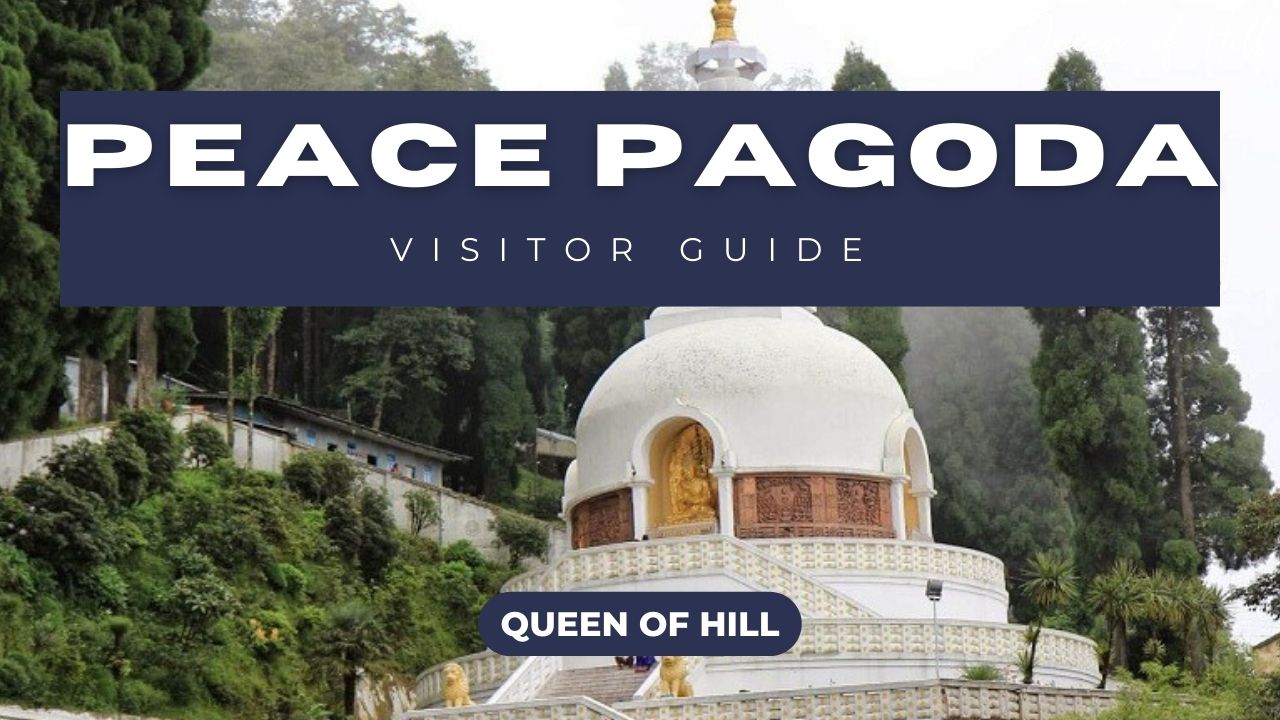
The structure is a large white stupa-style monument with golden statues depicting important events from the life of Buddha. These relief panels are placed around the circular walls of the pagoda.
Visitors can walk around the structure along a paved path while observing these detailed sculptures.
Quiet Atmosphere
Unlike many popular viewpoints, the Peace Pagoda offers a calm environment suitable for meditation or quiet reflection. Visitors often notice how peaceful the surroundings feel compared to the busy town areas.
Scenic Hill Views
Although it is primarily a spiritual site, the location also offers views of the surrounding hills and valleys of Darjeeling.
History of the Japanese Peace Pagoda
The Japanese Peace Pagoda in Darjeeling was constructed in 1992 by the Nipponzan Myohoji Buddhist Order. The organization was founded by Japanese Buddhist monk Nichidatsu Fujii, who devoted his life to promoting world peace through spiritual practice and non-violent activism.
After the Second World War, the organization began building Peace Pagodas around the world as symbols of hope and reconciliation.
Darjeeling was chosen as one of the locations because of its historical connections with Buddhism and its position in the Himalayan region, where Buddhist culture has long been present.
Today, the pagoda stands not only as a religious structure but also as a reminder of the global aspiration for peace.
How to Reach Japanese Peace Pagoda
From Darjeeling Town
Reaching the Japanese Peace Pagoda is relatively easy because of its proximity to the town center.
By Taxi
Local taxis are the most convenient option. The journey usually takes about 10–15 minutes from Mall Road.
Approximate taxi fare:
Rs 200–400 depending on the season.
Walking Option
For travelers who enjoy walking, it is possible to reach the pagoda on foot from Darjeeling town. The walk takes around 40–50 minutes and involves moderate uphill sections.
Walking in the early morning or late afternoon is recommended because the road is quieter and temperatures are comfortable.
Entry Fee & Timings
The Japanese Peace Pagoda is open to visitors every day.
Entry Fee:
Free for all visitors
Opening Hours:
Approximately 4:30 AM to 7:00 PM
Temple Prayer Sessions:
Morning and evening prayer ceremonies are often held at the nearby Buddhist temple.
Visitors are welcome to observe these sessions respectfully.
Best Time to Visit the Peace Pagoda
Morning Visits
Morning hours are ideal because the air is fresh and the area is quiet. Early visits also allow better photography with soft lighting.
Afternoon and Evening
Late afternoon can also be pleasant, especially when the sunlight highlights the white structure of the pagoda.
Best Months
The best months to visit Darjeeling, including the Peace Pagoda, are:
- March to May (pleasant spring weather)
- October to December (clear skies and good visibility)
During the monsoon months from June to September, fog and rain are frequent.
What to See & Do at the Peace Pagoda
Walk Around the Pagoda
Visitors can walk around the circular base of the pagoda. This path provides close views of the golden sculptures representing different stages of Buddha’s life.
Visit the Buddhist Temple
Below the pagoda lies the Nipponzan Myohoji Temple where monks perform traditional prayer rituals.
The rhythmic drum chanting during prayer sessions creates a unique spiritual atmosphere.
Enjoy the Peaceful Surroundings
The surrounding hill area is quiet and ideal for short walks or moments of reflection.
Many visitors choose to sit nearby and enjoy the calm environment.
Photography Tips
The Japanese Peace Pagoda is a visually striking structure, and careful timing can improve photographs.
Best time for photos:
Morning light provides soft shadows and highlights the white dome.
Best angle:
Standing slightly below the pagoda allows you to capture the full structure along with the surrounding hills.
Include the Buddha panels:
The golden sculptures around the walls add depth and cultural context to photographs.
Avoid photographing during midday when lighting can become harsh.
Nearby Places to Visit
Several popular attractions are located within short distance of the Peace Pagoda.
Darjeeling Zoo
Padmaja Naidu Himalayan Zoological Park is known for its conservation programs focused on high-altitude Himalayan wildlife.
Himalayan Mountaineering Institute
Located next to the zoo, this institute preserves the history of mountaineering in the Himalayas.
Batasia Loop
Batasia Loop is famous for its spiral railway track and views of Mount Kanchenjunga.
These attractions can easily be included in a single day sightseeing plan.
For more planning ideas, explore:
- Darjeeling Travel Guide
- Tiger Hill Sunrise Guide
- Toy Train Guide
- Where to Stay in Darjeeling
How Much Time is Needed?
Most visitors spend a short but meaningful time at the Peace Pagoda.
Typical duration:
- 30 minutes: Quick visit and photos
- 45 minutes: Walk around pagoda and temple visit
- 1–1.5 hours: Including time for prayer observation and relaxation
The site is compact but rewarding.
Travel Tips
- Dress modestly since it is a religious site.
- Maintain silence around prayer areas.
- Remove shoes if entering the temple hall.
- Early morning visits offer the best atmosphere.
- Carry a light jacket, as hill winds can be cool.
Respectful behavior ensures that the peaceful environment is preserved for everyone.
Conclusion
The Japanese Peace Pagoda in Darjeeling stands as a symbol of peace, spirituality, and cultural connection between India and Japan. Its quiet setting, distinctive architecture, and spiritual message make it a unique attraction in the region.
While Darjeeling is widely known for mountain views and colonial heritage, places like the Peace Pagoda reveal another dimension of the town — one rooted in reflection and cultural harmony.
For travelers seeking a calm experience away from crowded markets and viewpoints, the Japanese Peace Pagoda offers a memorable and meaningful visit.