Batasia Loop Darjeeling Visitor Guide – A Complete Travel Guide from Darjeeling
Introduction
Batasia Loop is one of the most scenic and historically important viewpoints in Darjeeling. Known for its spiral railway track and open mountain views, it forms a memorable part of any Darjeeling itinerary. The loop is a section of the historic Darjeeling Himalayan Railway where the toy train curves around a beautifully maintained garden before heading toward Ghoom.
Visitors come here for three main reasons: to witness the engineering marvel of the spiral railway, to see the War Memorial dedicated to Gorkha soldiers, and to enjoy clear views of Mount Kanchenjunga on bright mornings. Unlike crowded town viewpoints, Batasia Loop offers open space, structured pathways, and a well-maintained garden setting.
As someone based in Darjeeling, I often recommend Batasia Loop not just as a photo stop, but as a place where railway history, mountain landscape, and regional pride meet in one location.
Where is Batasia Loop Located?
Batasia Loop is located about 5 kilometers from Darjeeling Mall Road on the way to Ghoom. It sits at an altitude of around 7,400 feet above sea level.
- Distance from Darjeeling Mall Road: Approx. 15–20 minutes by car
- Nearest landmark: Ghoom Railway Station (about 1 km away)
- Route: On the Hill Cart Road connecting Darjeeling and Ghoom
The location is easy to include while visiting Tiger Hill or Ghoom Monastery. Most sightseeing taxis cover Batasia Loop as part of the standard Darjeeling local tour circuit.
Why Batasia Loop is Famous
Toy Train Spiral
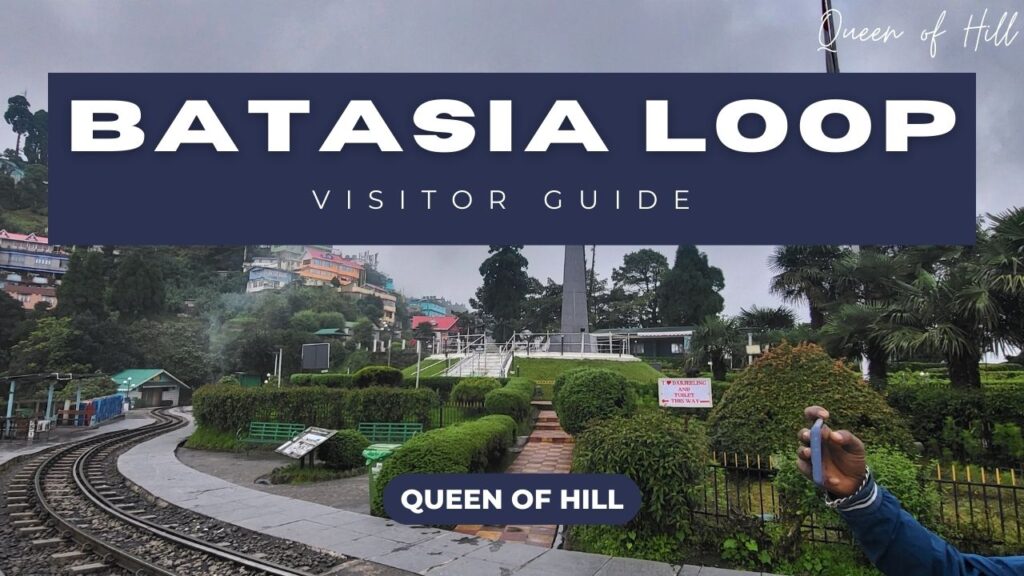
The most distinctive feature of Batasia Loop is the spiral railway track built to help the toy train navigate a steep gradient. The narrow-gauge train curves around the garden in a near-perfect circle before climbing toward Ghoom.
This section is part of the historic Darjeeling Himalayan Railway, a UNESCO World Heritage-listed railway line. Watching the toy train slowly move along the curved track with mountains in the background is one of Darjeeling’s iconic visuals.
War Memorial
At the center of the loop stands a well-maintained War Memorial dedicated to Gorkha soldiers who lost their lives in various wars after Indian independence. The memorial adds a solemn and meaningful dimension to the visit.
It is not just a tourist attraction but a respected site for locals. Visitors are expected to maintain decorum.
Kanchenjunga View
On clear mornings, Batasia Loop offers a wide-angle view of Mount Kanchenjunga. The open circular garden provides an unobstructed panorama, unlike some narrow viewpoints in town.
Weather plays an important role. Clear visibility is more likely in early mornings, especially between October and December.
Garden Setting
The landscaped garden around the loop is well maintained with seasonal flowers and walking paths. Benches are placed at intervals, making it suitable for elderly visitors as well.
History of Batasia Loop
Batasia Loop was built in 1919 as part of the Darjeeling Himalayan Railway expansion to solve a practical engineering challenge.
The railway line between Darjeeling and Ghoom involves a steep ascent. To manage this gradient safely without using advanced locomotives, British engineers created a spiral loop system. This allowed the train to gain altitude gradually without excessive strain.
The Darjeeling Himalayan Railway itself began operations in 1881. It was constructed to improve connectivity between the plains of Siliguri and the hill station of Darjeeling, which was then a major British administrative and summer retreat.
The loop is therefore not just scenic—it represents early mountain railway engineering adapted to Himalayan terrain.
How to Reach Batasia Loop
From Darjeeling Town
The easiest way to reach Batasia Loop is by local taxi. Most sightseeing packages include it as part of a half-day tour.
By Taxi
- One-way taxi fare (approximate): Rs 300–500 depending on season
- Often included in shared sightseeing tours
By Toy Train
If you book the Darjeeling–Ghoom joy ride, the toy train passes through Batasia Loop. The train slows down, allowing passengers to enjoy the spiral view.
Walking Option
For active travelers, walking from Darjeeling town is possible but involves uphill stretches. It takes approximately 1.5–2 hours depending on pace.
Entry Fee & Timings
- Entry Fee: Approximately Rs 20–30 per person
- Camera Charges: Usually no extra fee for mobile photography; professional cameras may have nominal charges
- Opening Hours: Around 6:00 AM to 5:00 PM (subject to seasonal variation)
Timings may change slightly during winter or heavy monsoon periods.
Best Time to Visit Batasia Loop
Morning vs Evening
Morning is the best time to visit Batasia Loop. Between 6:30 AM and 9:00 AM, the skies are usually clearer, offering better views of Kanchenjunga.
Evenings are pleasant but mountain visibility often reduces due to clouds.
Summer vs Winter
- Summer (March–June): Comfortable temperatures, moderate crowd
- Monsoon (July–September): Frequent fog and rain; limited mountain views
- Autumn (October–November): Best clarity and sharp mountain views
- Winter (December–February): Cold mornings, occasional frost, fewer tourists
October and November are widely considered the best months for photography.
What to See & Do at Batasia Loop
Watch the Toy Train
Check the joy ride schedule in advance if you want to see the train passing through. The visual of the locomotive circling the garden is unique.
Photography
The circular design allows for multiple angles. You can capture both the railway track and mountain background in a single frame.
Walk Through the Garden
The garden is clean and suitable for slow walks. Flower beds change seasonally.
Visit the War Memorial
Spend a few quiet minutes at the memorial. It provides context to the region’s military history and Gorkha contribution.
Photography Tips
- Best angle for Kanchenjunga: Stand on the outer edge of the circular pathway facing north-east.
- Best lighting: Early morning when sunlight hits the mountain range.
- Include railway track: Position yourself slightly elevated within the garden for a full spiral view.
- Avoid harsh midday light: Shadows become sharp and contrast increases.
Carrying a light jacket is useful, especially during winter mornings when winds are strong.
Nearby Places to Visit
You can combine Batasia Loop with several nearby attractions:
Ghoom Monastery
Located about 1 km away, Ghoom Monastery houses a large statue of Maitreya Buddha and offers peaceful surroundings.
Japanese Peace Pagoda
The Peace Pagoda provides another viewpoint and is part of the Nipponzan Myohoji Buddhist temple complex.
Padmaja Naidu Himalayan Zoological Park
Commonly known as Darjeeling Zoo, it is home to high-altitude species like red pandas and snow leopards.
For detailed planning, read our:
- Darjeeling Travel Guide
- Tiger Hill Sunrise Guide
- Toy Train Guide
- Where to Stay in Darjeeling
How Much Time is Needed?
- 30 minutes: Quick stop for photos
- 1 hour: Leisurely walk and memorial visit
- 2 hours: If combined with Ghoom Monastery and nearby sites
Most visitors spend around 45 minutes here.
Travel Tips
- Carry a light jacket even in summer; wind exposure is high.
- Visit before 9 AM for clearer views.
- Avoid late monsoon afternoons due to fog.
- Maintain respect near the War Memorial.
- Weekends and peak tourist seasons (April–May, October) can be crowded.
Conclusion
Batasia Loop is more than a photo stop on the Darjeeling sightseeing circuit. It combines railway heritage, mountain views, landscaped gardens, and regional history in a compact and accessible location.
For first-time visitors, it provides a balanced introduction to Darjeeling’s character. For returning travelers, it offers a quieter moment to appreciate the Himalayan landscape and the legacy of the Darjeeling Himalayan Railway.
When planned at the right time of day, Batasia Loop remains one of the most rewarding short visits in Darjeeling.